The Quiet Rhythm of Kyoto: Sacred Gardens & Wood Joinery
On finding tranquility within the historic district of Daitoku-ji and understanding the invisible joinery keeping cedar structures standing for centuries.
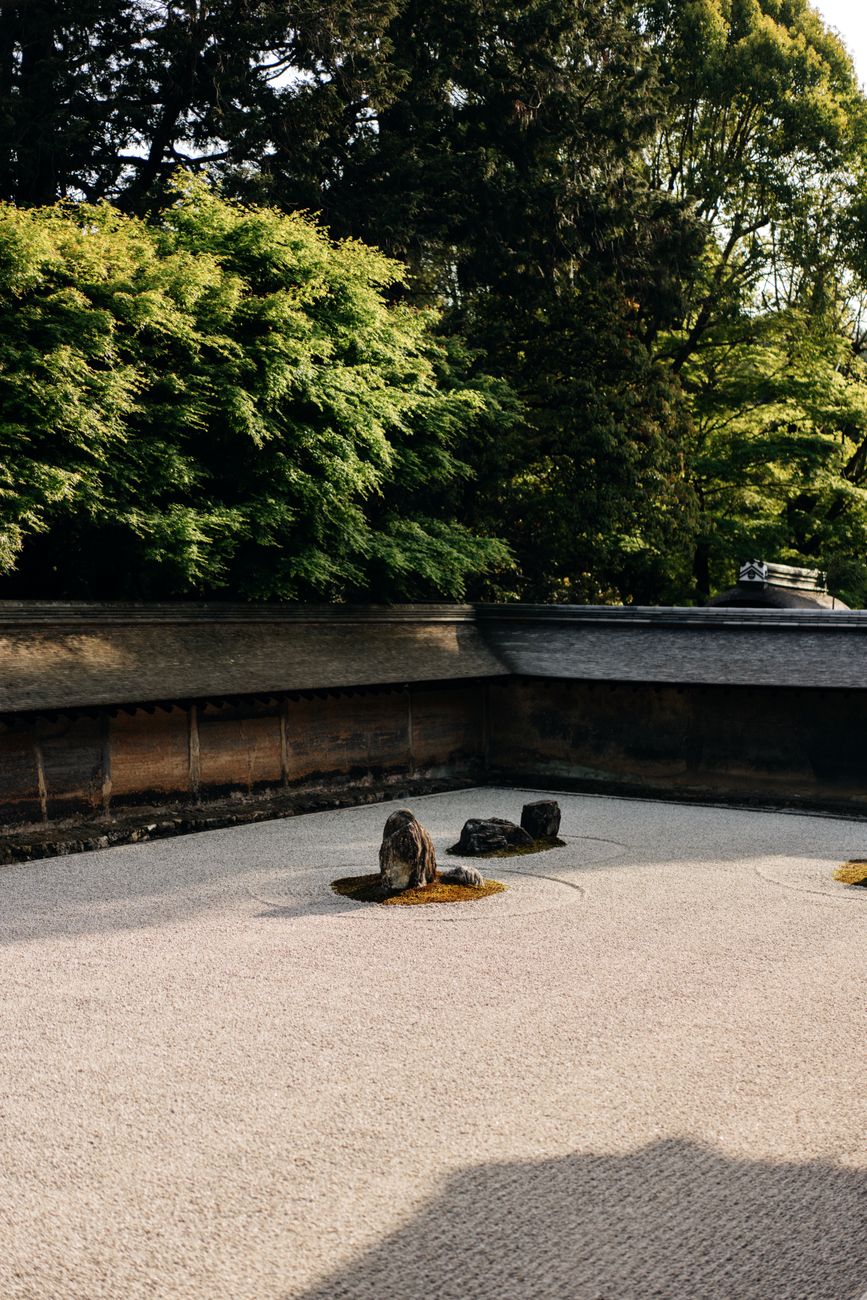
Dawn arrives in Kyoto not with noise, but with the subtle sweeping of bamboo brooms against granite flagstones. Outside the monastery walls of Daitoku-ji, the morning mist hangs low over dark cryptomeria eaves.
Kyoto is frequently described through the prism of its celebrated landmarks: the golden pavilion, the vermilion arches of Fushimi Inari, the bustling teahouses of Gion. Yet to truly experience the spiritual cadence of the old capital, one must seek the spaces between—the quiet sub-temples where gravel beds are raked daily in solitary devotion, and where cedar timber is joined without a single metal nail.
The Philosophy of Kigumi Joinery
Japanese joinery, or kigumi, is a testament to structural patience. Masters of the craft (miyadaiku) spend decades observing the seasonal expansion of hinoki cypress and zelkova wood. In traditional temples, each interlocking dovetail and mortise is chiseled to microscopic precision, allowing the building to flex organically during earthquakes without losing structural coherence.
“Wood continues to breathe centuries after it has been harvested. An architect’s duty is not to dominate the tree, but to invite it into its next existence.” — Kenzo Takahashi, Master Carpenter
When walking barefoot across the smooth, unvarnished planks of Ryogen-in, one senses this living quality. The cedar remains cool in midsummer and yields slightly underfoot, absorbing footsteps and ambient echoes. It is an architecture that does not shout for attention, but rather quiets the mind of whoever enters.
The Minimalist Geometry of Dry Landscape
In the karesansui dry landscape gardens, rocks are placed not for decorative charm, but as points of cosmic orientation. A moss-covered boulder represents an island in an ocean of fine white sand; concentric ripples raked into the gravel mirror the movement of water, impermanence, and the passage of time.
Visiting these gardens in the early hours before public entry permits an encounter with authentic stillness. Here, time is measured not by clocks, but by the gradual shifting of shadows across gray stone surfaces.
Editorial Travel Notes for Kyoto
- Optimal Season: Late November for maple canopy foliage, or late May for vibrant green moss without peak holiday congestion.
- Respectful Conduct: Remove shoes promptly at the genkan step; speak in hushed tones; photography inside prayer halls is strictly prohibited.
- Recommended Reading: In Praise of Shadows by Junichiro Tanizaki.
To travel through Kyoto as a contemplative explorer is to accept that much will remain hidden. The most profound encounters are rarely marked on street signs, existing instead behind weathered cedar screens and within gardens that require one to simply sit, breathe, and observe.